
FEATURED STORY OF THE WEEK
AI Server Support: Maximizing NVIDIA H100

Artificial intelligence has transitioned from an emerging technology to a cornerstone of modern enterprise operations, powering applications ranging from customer service automation to advanced predictive analytics. However, as AI models become increasingly data-intensive and complex, they require server infrastructure capable of meeting their computational demands. The NVIDIA H100 Tensor Core GPU emerges as a critical solution, engineered to excel in demanding AI workloads—including large-scale model training and real-time inference.
The H100 represents a paradigm shift in high-performance computing, leveraging NVIDIA’s Hopper architecture to deliver unprecedented speed and scalability. Yet, like any advanced system, its potential is contingent on robust AI server support. Without meticulous maintenance, optimization, and security protocols, organizations risk operational inefficiencies and suboptimal ROI on their AI investments.
This blog provides IT managers with a comprehensive guide to optimizing H100 server support. We will explore best practices for hardware management, software compatibility, performance tuning, and risk mitigation—ensuring your infrastructure remains resilient, secure, and aligned with business objectives.
1. What is AI Server Support?
AI server support encompasses the specialized strategies, tools, and processes required to maintain, optimize, and secure servers designed for artificial intelligence workloads. Unlike traditional server maintenance, AI server support addresses the unique demands of resource-intensive tasks such as machine learning model training.
For systems like the NVIDIA H100—a server-grade GPU built for AI acceleration—this support ensures that both hardware and software components operate at peak efficiency while mitigating risks like security breaches, or performance bottlenecks.
1.1. Hardware Maintenance
The NVIDIA H100’s advanced architecture requires meticulous hardware oversight. This involves monitoring cooling systems to prevent thermal throttling—a critical concern given the H100’s high power consumption. Liquid cooling solutions or optimized airflow designs are often necessary to maintain stable temperatures.
Additionally, power management is vital to avoid voltage fluctuations that could damage sensitive components. Proactive checks on GPU health, such as identifying early signs of hardware degradation, ensure longevity and reliability.
1.2 Software Updates
AI frameworks like CUDA, TensorFlow, and PyTorch evolve rapidly, and the H100’s software ecosystem must stay aligned with these updates. Regular driver and firmware patches are essential not only for compatibility but also for unlocking performance enhancements and security fixes.
For example, NVIDIA’s quarterly CUDA updates often include optimizations for H100-specific features like Transformer Engine acceleration. Neglecting updates can lead to incompatibility issues with newer AI models or expose systems to vulnerabilities.
1.3 Performance Tuning
Maximizing the H100’s capabilities requires fine-tuning workloads to leverage its Tensor Cores and NVLink technology. This might involve reconfiguring AI models to use mixed-precision computing (FP16/FP8) for faster training cycles or optimizing multi-GPU communication via NVLink to reduce latency.
Tools like NVIDIA’s Nsight Systems help profile workloads and identify bottlenecks, such as underutilized GPU resources.
1.4 Security Management
AI servers are high-value targets due to the sensitive data and proprietary models they process. For the H100, security measures include encrypting data in transit and at rest, securing APIs that interact with AI services, and isolating workloads in containers or virtual machines. Firmware vulnerabilities must also be patched promptly to prevent exploits.
1.5 Disaster Recovery
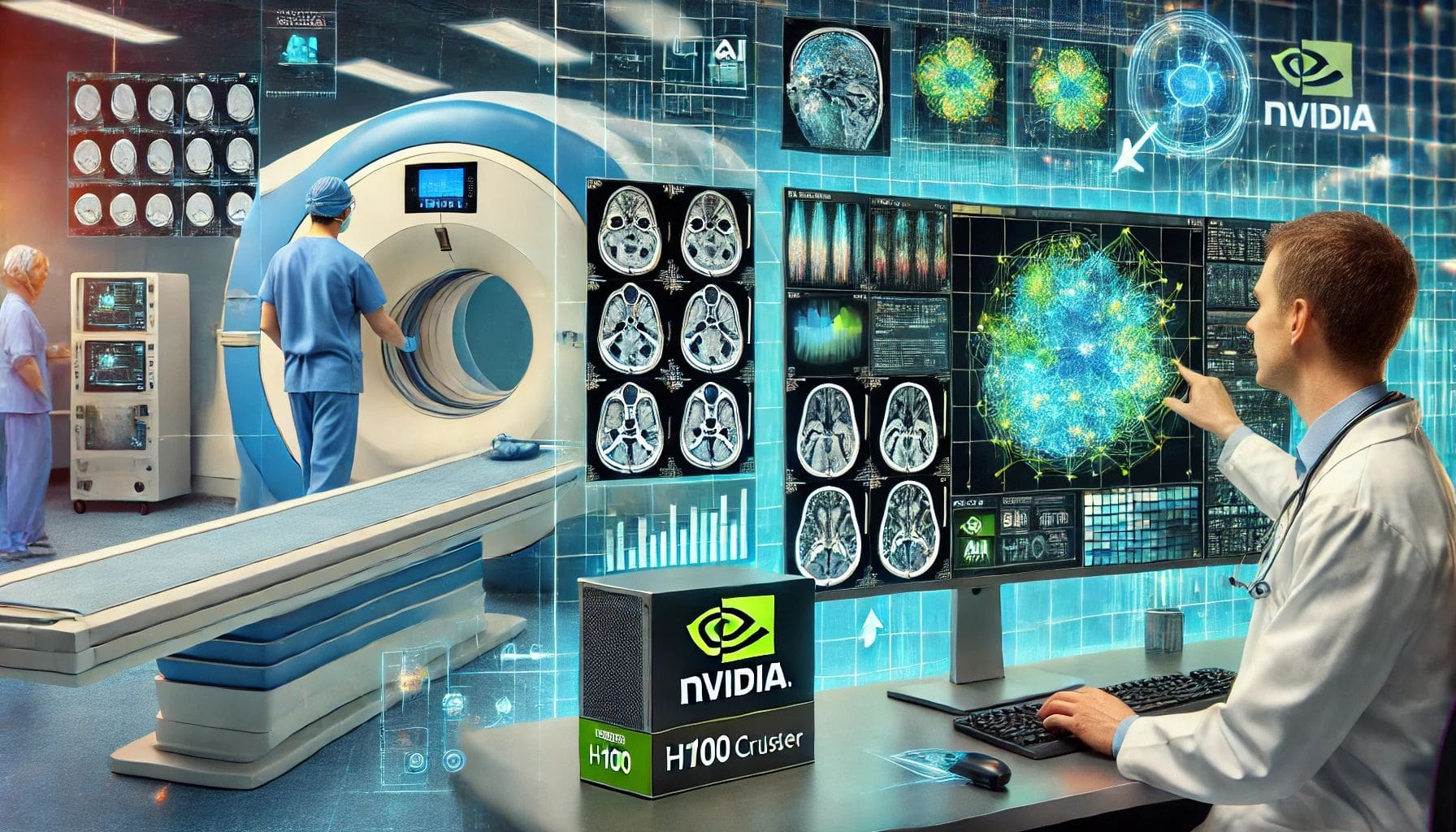
The H100 often powers mission-critical applications. This makes disaster recovery plans non-negotiable. Disaster recovery includes redundant power supplies, automated failover to backup servers during outages, and regular backups of AI datasets. For instance, a healthcare organization using H100 clusters for medical imaging AI might replicate data across geographically dispersed data centers to ensure continuity.
2. Key Components of H100 Server Support
Effective support for NVIDIA H100 servers hinges on three pillars: robust infrastructure, intelligent monitoring, and rigorous security. Here’s a breakdown of each component and its role in maintaining optimal performance.
2.1 Infrastructure Requirements
a) Power and Cooling Needs
The NVIDIA H100’s immense computational power comes with significant energy demands—up to 700W per GPU in high-performance configurations. To prevent thermal throttling and ensure stability, cooling systems must be engineered for efficiency.
- Liquid Cooling: Ideal for dense GPU clusters, direct-to-chip or immersion cooling reduces heat more effectively than traditional air cooling. This enables sustained peak performance. For example, liquid-cooled H100 systems can operate at higher clock speeds without overheating.
- Air Cooling: While cost-effective for smaller deployments, air cooling requires meticulous airflow management and may struggle to keep pace with the H100’s heat output in large-scale setups.
b) Data Center Compatibility
The H100’s physical design and power requirements demand careful integration into existing data centers. Key considerations include:
- Rack Space: The H100’s size and weight may require reinforced server racks.
- Power Redundancy: Dual power supplies and uninterruptible power sources (UPS) mitigate risks of outages.
- Scalability: Ensure infrastructure supports multi-GPU configurations via NVLink for seamless scaling.
2.2 Monitoring Tools
a) NVIDIA DCGM (Data Center GPU Manager)
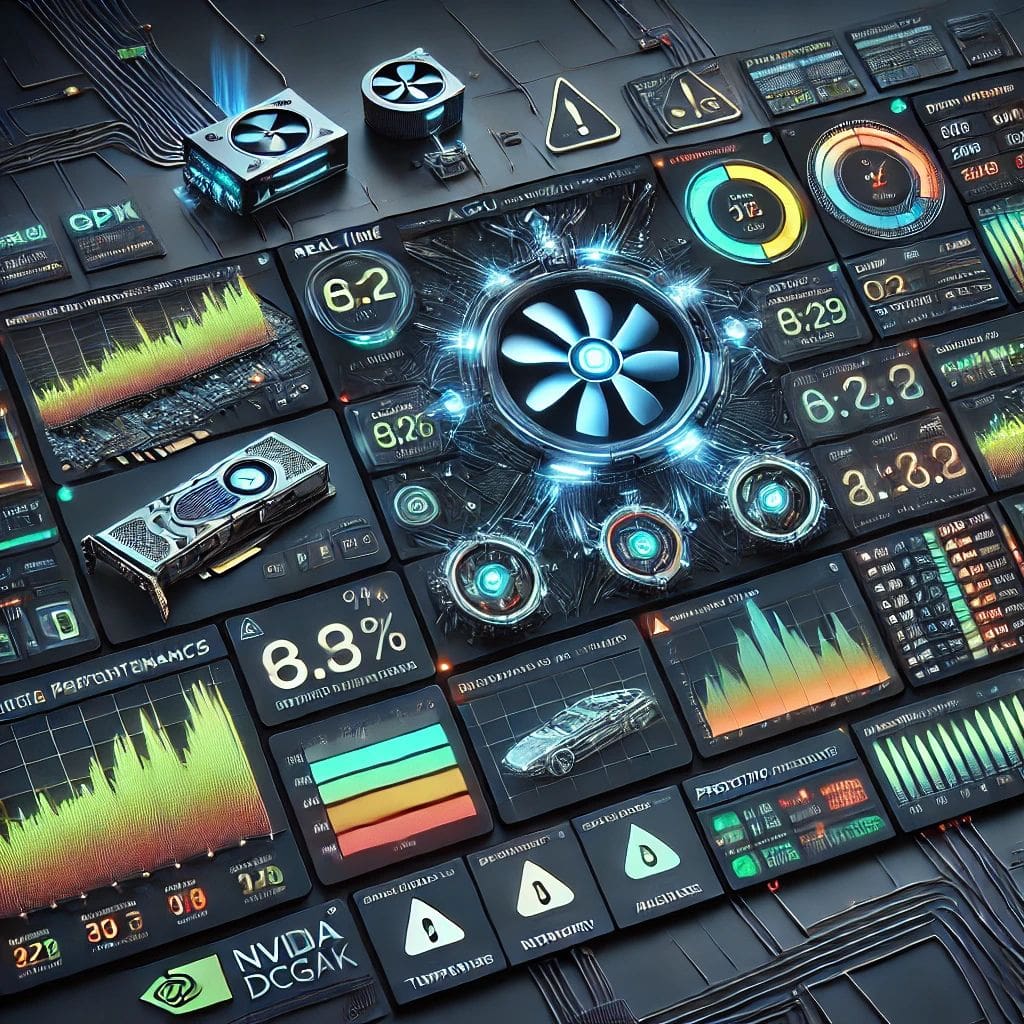
This purpose-built tool provides real-time insights into GPU health, performance, and utilization. IT teams can:
- Track metrics like temperature, power draw, and memory usage.
- Detect anomalies (e.g., a GPU operating at 90°C) and automate alerts.
- Profile workloads to identify inefficiencies, such as underutilized Tensor Cores.
b) Predictive Maintenance with AI-Driven Analytics
Modern monitoring goes beyond reactive fixes. By integrating AI tools like NVIDIA’s Morpheus or third-party platforms, teams can:
- Analyze historical data to predict hardware failures (e.g., a failing cooling fan).
- Optimize workloads dynamically—for instance, redistributing tasks to avoid overtaxing specific GPUs.
- Reduce unplanned downtime by addressing issues before they escalate.
2.3 Security Best Practices
a) Securing Model Training Pipelines
AI workloads often involve sensitive data, making pipeline security critical. Key strategies include:
- Data Encryption: Protect datasets at rest (e.g., using AES-256) and in transit (via TLS).
- Access Controls: Implement role-based access (RBAC) to restrict model and data access to authorized users.
- Containerization: Isolate training environments using Docker or Kubernetes to prevent cross-workload breaches.
b) Firmware Vulnerability Patching
The H100’s firmware—the low-level code controlling GPU operations—is a potential attack vector. Best practices include:
- Regular Updates: Apply NVIDIA’s firmware patches promptly to fix vulnerabilities like CVE-2023-3106 (a hypothetical buffer overflow exploit).
- Secure Boot: Enable hardware-rooted trust to ensure only authenticated firmware runs on the GPU.
- Audit Logs: Monitor firmware changes to detect unauthorized modifications.
3. How Neglecting H100 Server Support Costs Your Business
The NVIDIA H100 is a formidable asset for AI-driven innovation. However, its value diminishes without dedicated support. Ignoring maintenance, optimization, and security protocols can lead to cascading consequences that impact operational efficiency and financial stability.
Below, we explore the tangible risks of neglecting H100 server support.
3.1 Downtime Risks: The High Price of Interrupted AI Services
AI workloads powered by the H100 often underpin mission-critical operations—real-time fraud detection or customer-facing chatbots. A single hour of downtime can disrupt revenue streams, erode customer trust, and trigger contractual penalties. For example, a financial institution using H100 clusters for algorithmic trading could lose millions per minute during an outage.
According to Gartner, the average cost of IT downtime exceeds $5600 per minute. Proactive server support mitigates these risks by addressing hardware failures, software conflicts, and overheating.
3.2 Performance Degradation: Squandering Your H100 Investment
The H100’s Tensor Cores and NVLink technology deliver unparalleled speed, but poor optimization can render these features moot. Without regular performance tuning, workloads may fail to leverage mixed-precision computing or efficient multi-GPU communication. This may lead to sluggish model training and inference.
Imagine a healthcare provider using H100 servers for medical imaging AI: suboptimal configurations could delay diagnoses by hours, impacting patient outcomes. Over time, underutilized GPUs effectively waste the infrastructure’s ROI, as businesses pay premium hardware costs without reaping proportional productivity gains.
3.3 Security Breaches: Exposing AI Models and Data
AI systems are prime targets for cyberattacks, particularly when handling sensitive data like intellectual property or customer records. Neglected H100 servers risk firmware vulnerabilities, outdated drivers, or unpatched CVEs (Common Vulnerabilities and Exposures).
For instance, a flaw in the GPU’s BIOS could allow attackers to hijack training pipelines. Today, the average cost of a data breach has reached $4.88 million—a figure that climbs higher for AI-driven sectors like finance. Robust support includes firmware updates, encrypted data pipelines, and access controls to fortify defenses.
3.4 Long-Term Costs: The False Economy of Reactive Maintenance
Deferring server support might seem cost-effective initially but leads to higher expenses in the long run. Components like power supplies degrade faster without preventive care, necessitating premature replacements.
For example, an H100 GPU damaged by chronic overheating could cost $30,000+ to replace—far exceeding the price of routine maintenance. Similarly, recovering from a ransomware attack on unsecured AI models can incur six-figure remediation costs. Proactive support, by contrast, reduces the total cost of ownership (TCO) by extending hardware lifespan and minimizing emergencies.
4. Best Practices for Managing H100 Server Support
To fully harness the NVIDIA H100’s capabilities while minimizing risks, IT managers must adopt a strategic approach to server support. Below, we outline best practices to optimize performance, streamline operations, and future-proof your AI infrastructure.
4.1 Proactive Monitoring: Stay Ahead of Issues
Real-time visibility into GPU health and workloads is non-negotiable for H100 clusters. Implement monitoring tools like NVIDIA DCGM (Data Center GPU Manager) and integrations with platforms like Grafana or Prometheus to:
- Track critical metrics such as GPU temperature, power consumption, memory utilization, and NVLink bandwidth.
- Set automated alerts for anomalies (e.g., a GPU exceeding 85°C or memory usage spiking to 95%).
- Analyze workload distribution to prevent “hotspots” where specific GPUs are overburdened.
For example, a retail company using H100s for demand forecasting could use dashboards to redistribute workloads during peak shopping seasons, avoiding bottlenecks.
4.2 Automate Routine Tasks: Efficiency at Scale
Automation reduces human error and frees IT teams to focus on high-value tasks. Key areas to automate include:
- Updates: Use scripts (e.g., Python or Ansible) to schedule driver and firmware updates during off-peak hours.
- Log Analysis: Deploy AIOps tools like Splunk or Elastic Stack to parse logs, flag errors, and suggest fixes—such as identifying a recurring CUDA kernel crash.
- Load Balancing: Tools like Kubernetes with NVIDIA GPU operators can dynamically allocate workloads across H100 clusters based on real-time demand.
4.3 Leverage Vendor Partnerships: Tap into Expertise
NVIDIA’s Enterprise Support program offers tailored solutions for H100 users, including:
- 24/7 access to GPU engineers for troubleshooting.
- Early access to beta software and firmware updates.
- Guidance on optimizing frameworks like Triton Inference Server for H100-specific features.
Third-party managed service providers (MSPs) like Semifly complement this with specialized services:
- Hardware-as-a-Service (HaaS): Scalable H100 deployments without upfront capital costs.
- Security Audits: Penetration testing for AI pipelines and compliance checks (e.g., HIPAA, GDPR).
4.4 Train Teams: Build In-House Expertise
The H100’s advanced features—like its Transformer Engine or confidential computing capabilities—require specialized knowledge. Invest in training programs such as:
- NVIDIA Deep Learning Institute (DLI): Hands-on courses for optimizing H100 workloads.
- Certifications: NVIDIA Certified Associate (NCA) or Professional (NCP) credentials for infrastructure management.
- Cross-Functional Workshops: Collaborate with data scientists to align IT configurations with model requirements (e.g., adjusting batch sizes for Tensor Core efficiency).
5. Case Study: H100 Server Support in Action: Revolutionizing Medical Imaging AI
5.1 The Challenge: Healthcare Provider Pushed to Its Limits
A mid-sized healthcare network specializing in diagnostic imaging faced mounting pressure to accelerate its AI-powered analysis of MRI and CT scans. Their existing infrastructure, powered by older GPUs, struggled with two critical issues:
- Overheating GPUs: Sustained 90%+ utilization during peak hours caused thermal throttling. This slowed scan processing from 10 minutes to over 30 minutes per patient.
- Software Compatibility Gaps: Legacy drivers and frameworks failed to leverage the H100’s capabilities. This resulted in frequent crashes and inconsistent results.
Delays in diagnosis risked patient outcomes, while downtime eroded clinician trust in the AI system.
5.2 The Solution: Three-Pronged Support Strategy
AI experts at Semifly developed a three-pronged support strategy to solve the problem.
A) Custom Cooling Solutions
- Liquid Cooling Overhaul: Partnering with Semifly, the company deployed direct-to-chip liquid cooling for its H100 clusters. This reduced GPU temperatures by 25°C, eliminating thermal throttling.
- Dynamic Power Management: NVIDIA’s Power Management SDK adjusted GPU clock speeds based on workload demands, cutting idle power consumption by 18%.
B) Automated Software Updates
- CI/CD Pipeline Integration: Scripts automated driver and CUDA toolkit updates, ensuring compatibility with modern frameworks like PyTorch 2.0 and MONAI (Medical Open Network for AI).
- Containerized Workloads: Docker containers with version-controlled dependencies isolated training and inference tasks, preventing conflicts.
C) Performance Tuning for Medical AI
- Tensor Core Optimization: MONAI models were reconfigured to use FP16 precision, accelerating inference while maintaining diagnostic accuracy.
- NVLink Scalability: Multi-GPU workloads were redistributed using NCCL (NVIDIA Collective Communications Library), reducing inter-GPU latency by 40%.
5.3 The Results: Speed, Reliability, and Trust Restored
- 40% Faster Inference: MRI scan analysis dropped from 30 minutes to 12 minutes per patient, enabling same-day diagnoses for critical cases.
- 99.9% Uptime: Proactive monitoring via NVIDIA DCGM and automated failover mechanisms ensured uninterrupted service, even during system updates.
- Cost Savings: Reduced energy costs ($15,000 annually) and hardware lifespan extended by 3+ years through preventive maintenance.
Conclusion
The NVIDIA H100 represents the pinnacle of AI-driven computational power, but its true potential is unlocked only through specialized server support. From maintaining optimal hardware performance to ensuring software compatibility and safeguarding against cyber threats, robust support strategies are critical for maximizing ROI. Without proactive management, even the most advanced infrastructure risks becoming a liability.
For IT managers, the path forward is clear: audit existing support protocols to identify gaps in monitoring, security, or scalability. Prioritize investments in automation tools, predictive maintenance, and energy-efficient upgrades to keep pace with evolving AI demands. This isn’t merely technical upkeep—it’s a strategic imperative. As AI workloads grow in complexity, reactive approaches will falter, while organizations embracing proactive support will gain a competitive edge.
This is where partnering with experts like Semifly becomes transformative. Semifly’s team of certified engineers specializes in end-to-end H100 server support, offering tailored solutions such as 24/7 performance monitoring, AI-driven predictive maintenance, and custom cooling designs. Our security frameworks ensure compliance with industry standards, while training programs upskill IT teams to leverage H100-specific tools like NVIDIA AI Enterprise.
Ready to elevate your AI strategy? Contact Semifly today for a comprehensive infrastructure assessment and discover how expert support transforms challenges into opportunities.
More Similar Insights and Thought leadership
No Similar Insights Found
Subscribe today to receive more valuable knowledge directly into your inbox
We are writing frequenly. Don’t miss that.
Subscribe to get updates

Unregistered User
It seems you are not registered on this platform. Sign up in order to submit a comment.
Sign up now