
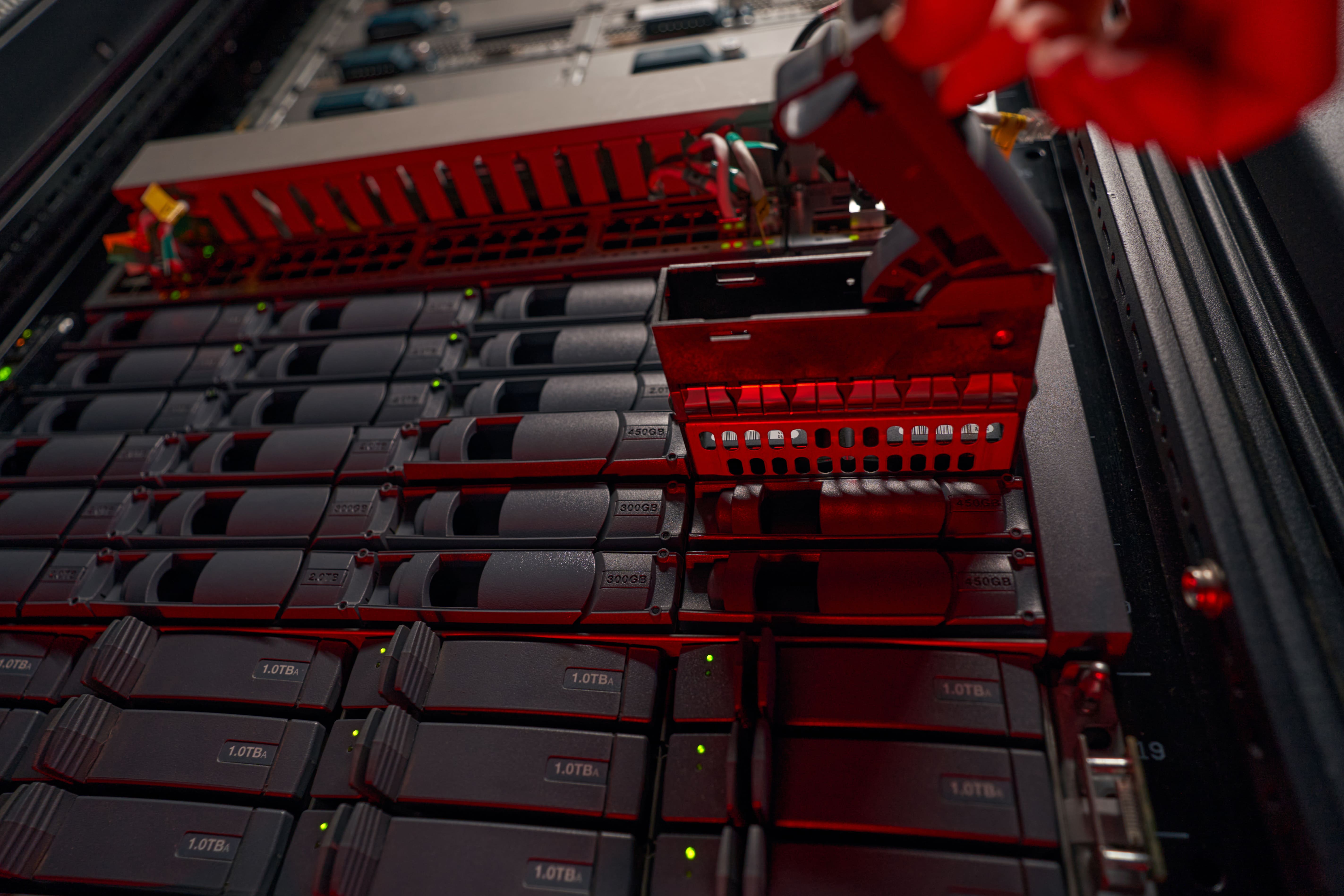
Most storage purchases are not exotic: a virtualization estate that needs dependable block storage, file shares that refuse to die, snapshots and replication that just work, and an administrator who has eleven other responsibilities. Dell's Unity XT line targets exactly that center of the market—midrange unified storage—and its longevity there says something the spec sheets do not: it made competent storage boring, which is the highest compliment infrastructure earns.
Key Takeaways
- Unified block and file in one array simplifies the midrange estate—one platform, one skill set, one support contract.
- All-flash and hybrid configurations let economics, not dogma, sort hot from warm data.
- Built-in efficiency (dedupe/compression), snapshots, and replication cover the resilience baseline without add-on complexity.
- Best fit: virtualization, databases, and general enterprise file—not the scratch tier of an AI training cluster.
01What “unified” buys in practice
Unity XT serves block (FC/iSCSI) and file (NFS/SMB) from the same array and management plane. For midmarket and departmental estates, that consolidation is the headline: VMware datastores, SQL volumes, and the corporate file shares stop being three systems with three upgrade calendars. The operational surface—a genuinely usable HTML5 manager, sane defaults, CloudIQ telemetry for fleet health—is engineered for the administrator who does storage on Tuesdays, not the dedicated SAN team.
02Hybrid economics, flash behavior
All-flash models cover latency-sensitive workloads; hybrid configurations blend flash with capacity disks and tier automatically, keeping hot data fast while colder data rides cheaper media. Inline deduplication and compression stretch effective capacity further—routinely 2–3× on virtualization workloads. The result is a price-per-usable-terabyte story that keeps the platform competitive precisely where budgets are tightest.

03Resilience as standard equipment
- Snapshots with scheduling and consistency groups—the first line of ransomware recovery when paired with immutable copies downstream.
- Replication (sync and async) to a second array for DR that midmarket teams can actually operate.
- Non-disruptive everything: controller updates and drive growth without maintenance-window drama.
- Cloud tiering for the long tail of cold file data.
04Honest boundaries
Unity XT is not the answer for scale-out unstructured oceans (object platforms own that), nor for the bandwidth-hungry scratch tier of GPU training clusters (parallel filesystems and NVMe fabrics own that). It is the answer for the consolidated, mixed, virtualized middle—which is most of what most enterprises actually run.
05Verdict
In an estate review, we slot Unity XT where its temperament fits: the dependable unified tier under virtualization, databases, and file services, sized with honest growth headroom and paired with proper backup. It will not headline a keynote—it will quietly hit its latency numbers for seven years, which is what the workloads in question actually wanted.
Ready to put this into practice?
Talk to the Semifly team about your infrastructure, security, and compliance roadmap.
Contact Us