
FEATURED STORY OF THE WEEK
H200 Server Optimization: Best Practices for Batch Size, Precision, and Performance Monitoring

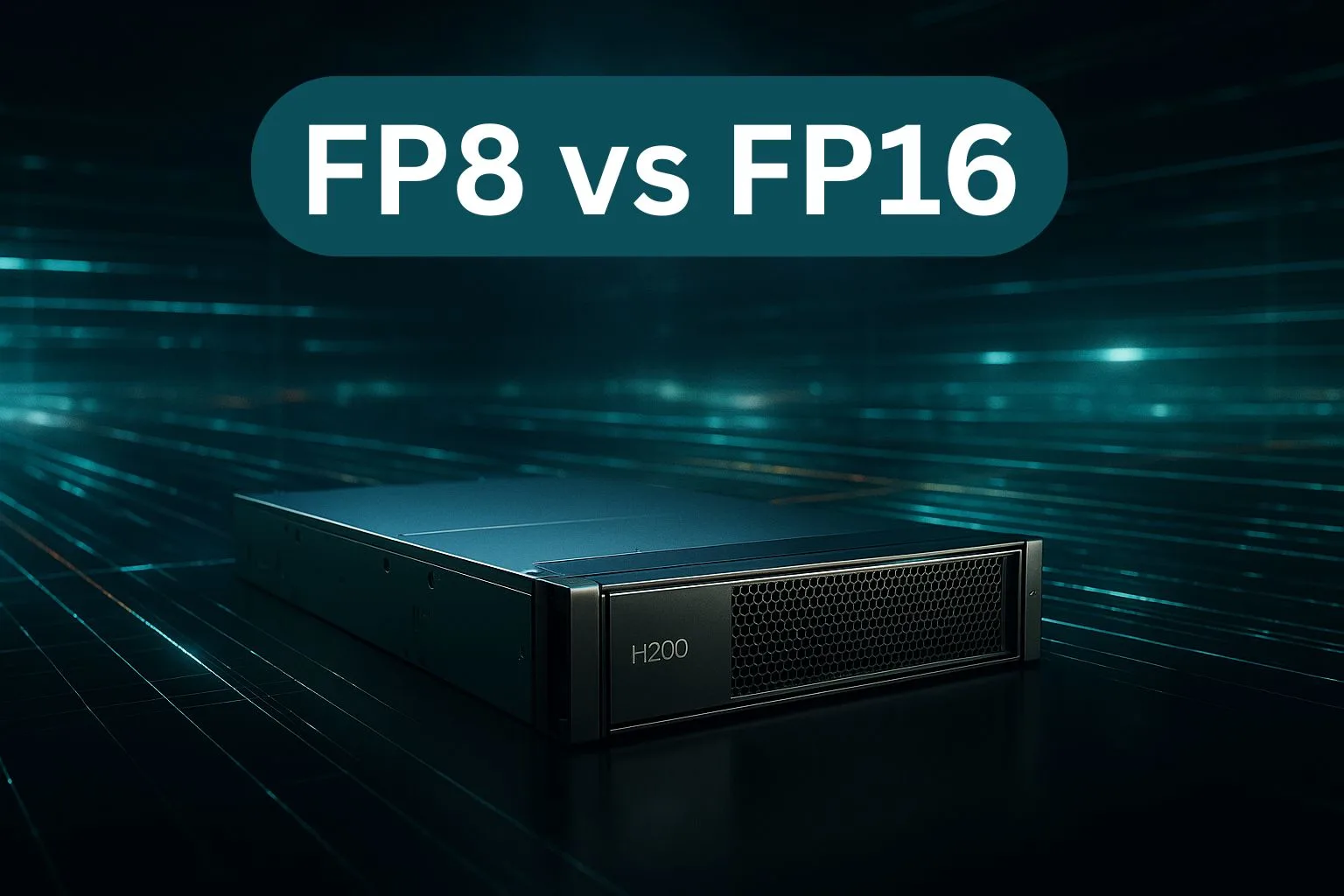
Why H200 Server Optimization Matters for AI Workloads
Buying the world’s most powerful GPU doesn’t guarantee performance—especially in modern AI workloads. Many teams invest in NVIDIA’s H200 but underutilize it. Why? Because server performance today is shaped more by how you configure the hardware than what’s on the spec sheet.
Common mistakes include:
- Poor batch sizing
- Suboptimal memory usage
- Misuse of precision modes (like sticking to FP16 when FP8 is optimal)
The H200 GPU, with 141 GB HBM3e memory, 5.2 TB/s bandwidth, and Gen 2 Transformer Engine, delivers exceptional power, but only if you tune it right.
That’s where Semifly steps in. We provide pre-optimized DGX-H200 clusters preloaded with:
- NVIDIA Triton Inference Server
- NeMo framework
- Memory profiling tools and dashboards
These help AI teams unlock true throughput without the trial and error.

Why Use LLaMA 13B to Benchmark H200 Optimization?
We use Meta’s LLaMA 13B model to benchmark performance across batch size, memory, and precision settings. Why this model?
- It’s large enough (13 billion parameters) to stress memory bandwidth and FP8 execution.
- It fits on a single H200, avoiding the complexities of multi-GPU coordination.
- It reflects real-world use cases, including:
- RAG-based systems
- Domain-specific chatbots
- On-prem inference
Plus, LLaMA 13B is freely available on HuggingFace, supports both FP16 and FP8, and is frequently searched—making it perfect for high-intent technical readers.
How to Optimize Batch Sizes on H200 for Maximum Throughput
Batch size refers to how many inputs (like token sequences) are processed simultaneously. Larger batches generally increase throughput, but they also consume more memory. The key is to find the sweet spot.
Table 1 – Batch Size vs Throughput vs Latency (LLaMA 13B on H200)
| Batch Size | Tokens/sec | Latency (ms) | GPU Utilization |
|---|---|---|---|
| 8 | 9,500 | 120 | 78% |
| 16 | 11,200 | 105 | 90% |
| 32 | 11,600 | 102 | 94% |
Beyond batch size 32, the performance gain flattens, while memory usage increases sharply. That’s when thrashing can begin, when memory gets repeatedly overwritten and reclaimed, reducing efficiency.
Why Use Mixed Precision (FP8/FP16) on H200 Servers?

Precision refers to the data type used in GPU computation. Lower precision formats like FP8 use fewer bits and consume less memory, which allows for:
Larger batches
Lower latency
Faster training and inference
The H200’s Gen 2 Transformer Engine is built specifically for FP8 workloads. Here’s how it compares:
- FP16 model size: ~26 GB
- FP8 model size: ~15 GB
This difference opens up capacity for larger context windows, more concurrent users, or just smoother throughput.
Semifly ships H200 clusters with FP8-ready software stacks like:
Triton Inference Server
NeMo framework for LLM tuning and deployment
How to Monitor and Optimize GPU Memory on H200
Monitoring memory saturation is critical—especially when running large models. If memory use exceeds GPU limits, the model begins to “thrash,” causing:
- Reduced throughput
- Higher latency
- More frequent memory swaps
Here’s a quick PyTorch snippet to monitor memory:
python
import torch
print(“Max Memory Used (GB):”, torch.cuda.max_memory_allocated() / 1e9)
Other tools include:
- NVIDIA SMI for GPU-level telemetry
- Triton Inference metrics
- Semifly’s observability dashboards that map GPU usage to cost-per-inference
Learn more: AI Infrastructure Consulting from Semifly

H100 vs H200 for AI Optimization, What’s the Real Difference?
Here’s how the optimization headroom of H200 compares to its predecessor.
Table 2 – Optimization Flexibility Comparison
| Feature | H100 | H200 |
|---|---|---|
| Memory Capacity | 80 GB | 141 GB |
| Memory Bandwidth | 3.35 TB/s | 5.2 TB/s |
| Max Batch Size (13B) | ~16 | ~32–48 |
| FP8 Support | Gen 1 | Gen 2 |
| Inference Speed (13B) | ~7,200 t/s | ~11,800 t/s |
Insight:
With H200, memory is no longer the bottleneck. You get more flexibility in tuning models for speed, latency, and user concurrency.
How Semifly Helps Enterprises Unlock H200’s Full Potential
Semifly goes beyond hardware delivery. We help AI teams extract maximum ROI from their infrastructure.
Included in our offering:
- Pre-deployed DGX-H200 clusters
- Support for FP8/FP16 tuning across frameworks
- Memory profiling dashboards to spot bottlenecks
- Batch size optimization playbooks
CTA:
Want to optimize your H200 cluster for peak throughput?
Request a memory profiling session to tune batch size, model precision, and performance per workload.
More Similar Insights and Thought leadership
No Similar Insights Found
Subscribe today to receive more valuable knowledge directly into your inbox
We are writing frequenly. Don’t miss that.
Subscribe to get updates

Unregistered User
It seems you are not registered on this platform. Sign up in order to submit a comment.
Sign up now