




SemiflyContact
FEATURED STORY OF THE WEEK

How the U.S. Military is Using 5G to Transform its Networked Infrastructure

Written by :  
semifly
Team Semifly
5 minute read 7 minute read 
December 1, 2021
Category : Digital
How the U.S. Military is Using 5G to Transform its Networked Infrastructure

5G is not only a consumer upgrade — it is a strategic capability. Defense organizations are adopting private 5G to connect sensors, vehicles, and personnel with the bandwidth, low latency, and reliability that modern operations demand.

Why 5G for defense

5G brings high bandwidth, very low latency, and the ability to connect enormous numbers of devices in a defined area. For defense, that enables real-time situational awareness, autonomous systems, and data-heavy applications at the tactical edge — capabilities older networks could not support.

Private networks and the edge

  • Private 5G — secure, controlled networks on bases and in the field.
  • Edge computing — processing data where it is generated, not in distant clouds.
  • Resilience — networks that degrade gracefully under contested conditions.

Key takeaways

  • 5G enables real-time, data-intensive operations at the edge.
  • Private networks keep sensitive traffic controlled and secure.
  • Edge computing pairs naturally with 5G's low latency.
  • Resilience and security are non-negotiable in defense contexts.

The infrastructure underneath

Private 5G and edge computing depend on hardened, well-architected infrastructure. Semifly's experience across aerospace and defense helps organizations design networks that meet demanding security and reliability requirements.

Bookmark me
Share on
Comments
Add your Comment

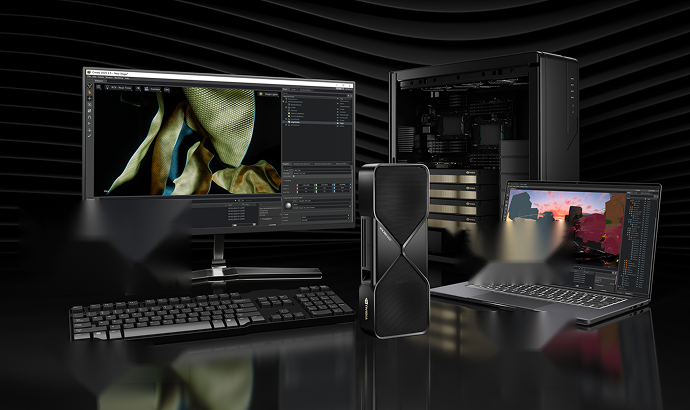
Explore Nvidia’s GPUs

Find a perfect GPU for your company etc etc
Go to Shop

FAQs

  • 5G stands for fifth-generation wireless technology, utilizing both conventional and millimeter-wave (mmWave) frequencies to achieve data speeds up to 100 times faster than those found in 4G networks. Additionally, 5G networks offer greater bandwidth, allowing them to support more devices simultaneously with reduced latency. While consumers are still waiting to realize the full benefits due to outdated infrastructure, the U.S. military is already undertaking some of the largest real-world 5G applications. The U.S. Department of Defense (DoD) announced a $600 million investment in May 2020 to fund 5G experimentation and partnerships with private-sector companies. These pure 5G communications systems are intended to connect distant sensors and weapons into a dense, resilient battlefield network. Current use cases include developing 5G-enabled augmented reality (AR) for mission planning and training, creating “smart warehouses” for improving naval logistics operations at bases like Naval Base Coronado, and expanding data acquisition via radar systems to 5G cellular devices for Air Force command and control (C2).

  • The advanced 5G networks are crucial for facilitating complex real-time operations, such as Distributed Command and Control (C2), which relies on a network of sensors connecting land, air, and space operations via a shared cloud environment. However, the data processing demands of modern operations—both military and civilian—are increasingly dominated by AI. The explosion in real-time AI applications, such as chatbots and self-driving cars, which rely on AI inference (the moment a trained model makes a decision), has created a huge demand for specialized chips that offer blazing speed, energy efficiency, and affordability. To meet the intense demands of enterprise AI, specialized computing platforms are required, as standard servers often struggle with the complexity of modern AI models.

  • The NVIDIA DGX platform is a fully integrated AI supercomputing solution designed specifically for enterprises, combining purpose-built hardware, optimized software, and support services into one unified system. At the core of the latest generation is the NVIDIA H200 GPU, which represents a groundbreaking leap in High-Performance Computing (HPC). The DGX H200 is a powerful, factory-built AI supercomputer designed for complex AI and research tasks. This system is engineered to handle massive, computation-intensive tasks like training LLMs by processing enormous datasets and billions of parameters efficiently.

  • The NVIDIA H200 GPU is built on the Hopper architecture and features significant hardware advancements over its predecessors. It is equipped with an unprecedented 141 GB of HBM3e memory and a massive 4.8 TB/s memory bandwidth. This memory configuration directly tackles the biggest bottlenecks in LLM training and AI inference by allowing for the use of larger data batches. The H200 also incorporates 4th-generation Tensor Cores and an integrated Transformer Engine that uses FP8 precision, delivering up to 1.9x faster inference performance compared to the H100. For highly intensive scientific research, these features deliver 2x faster AI training and simulation speeds.

  • To scale efficiently, H200 systems utilize NVIDIA NVLink and NVLink Switch technology to overcome traditional PCIe limitations, providing ultra-fast GPU-to-GPU communication. NVLink is a high-bandwidth, low-latency interconnect that allows GPUs to communicate directly and create a unified memory space. The NVLink Switch extends this connection, enabling all-to-all GPU communication across an entire rack, transforming GPU racks into unified supercomputers. Furthermore, data center architecture for the H200 must address operational challenges, including high heat density; the DGX H200 has a maximum thermal output of 10.2 kW, making liquid cooling the recommended solution. Management and automation are streamlined through the integration of Redfish API support via the Baseboard Management Controller (BMC), which serves as the industry standard for comprehensive remote infrastructure management.

  • While NVIDIA H200 servers carry a higher upfront sticker price, they deliver significant long-term savings that substantially reduce the Total Cost of Ownership (TCO). The H200’s efficiency, delivering 1.9x higher performance, slashes operational expenses—including power, cooling, space, downtime, and staff productivity—by up to 46% compared to older GPUs. Because fewer H200 servers are needed to complete the same amount of work, enterprises reduce their data center footprint and energy consumption. In one comparison, a 100-GPU H200 cluster saved over $6.7 million across five years compared to an H100 setup, often reaching the payback point by Year 2, positioning the H200 as an investment in efficiency and scalability.

  • NVIDIA uses its own AI technologies to fight modern, AI-driven cyber threats which surpass traditional, rule-based security systems. The company’s end-to-end Cybersecurity AI platform includes accelerated computing, specialized GPUs, DPUs, and modular AI microservices. Key tools include NVIDIA Morpheus for real-time anomaly detection and the NVIDIA® UFM® Cyber-AI platform. UFM Cyber-AI is an AI-powered extension of the Unified Fabric Manager that transforms InfiniBand fabric management by using machine learning models and real-time telemetry to predict and prevent failures. This system integrates with the H200 GPUs, which provide the crucial compute power necessary for large-scale, real-time telemetry analysis, creating an intelligent, automated, and scalable security system.

More Similar Insights and Thought leadership

Zero-Trust Security Implementation: How Managed Services Turn Strategy into Continuous Protection

Zero-Trust Security Implementation: How Managed Services Turn Strategy into Continuous Protection

Zero-trust security replaces obsolete perimeter defenses with a model that assumes breach and mandates explicit verification for every access request, regardless of location,,. Unlike static…
14 minute read
Energy and Utilities
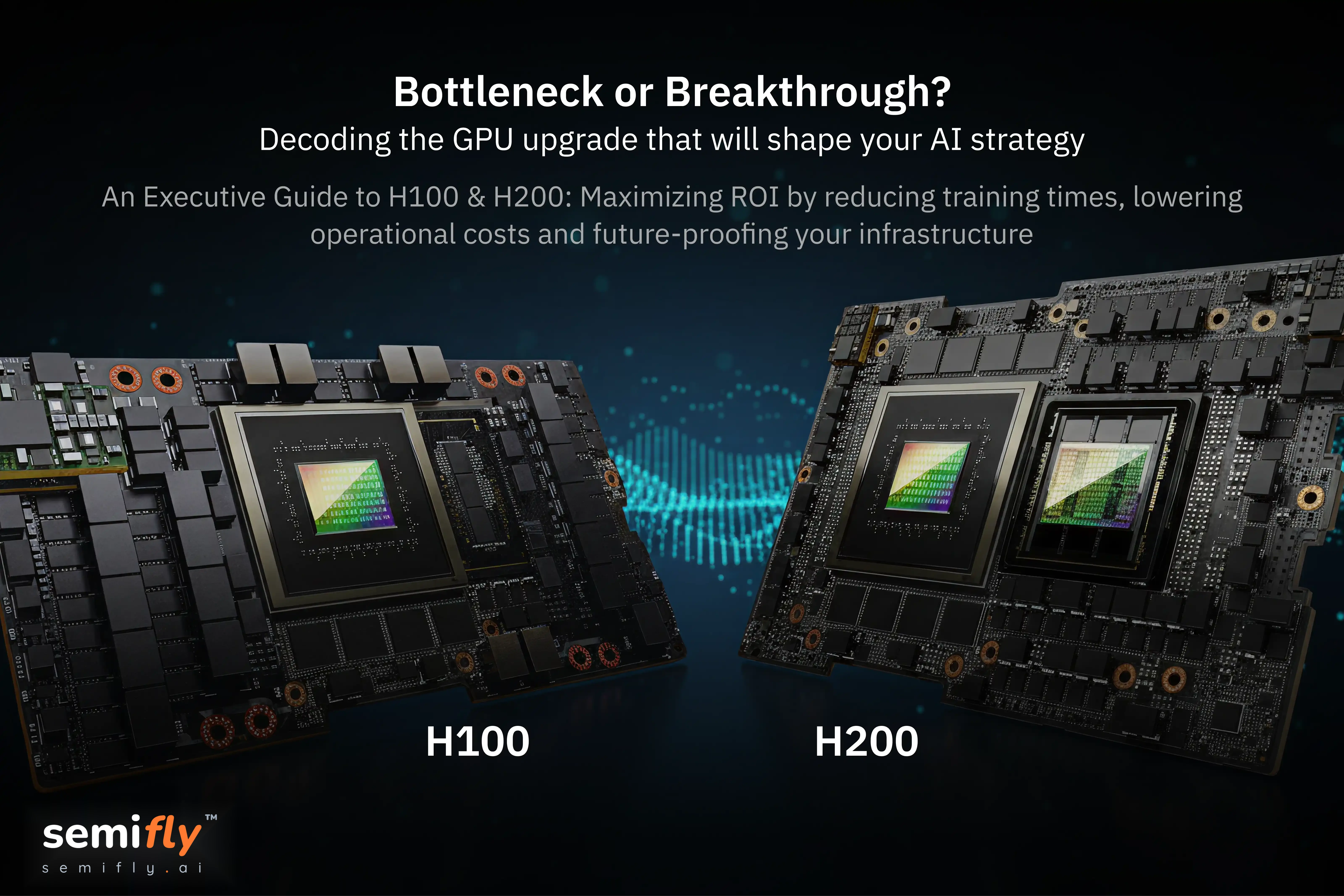
H100 vs H200 Performance Comparison: Decoding the GPU Upgrade That Will Shape Enterprise AI

H100 vs H200 Performance Comparison: Decoding the GPU Upgrade That Will Shape Enterprise AI

The NVIDIA H200 GPU enhances the H100, sharing the same Hopper architecture but targeting performance bottlenecks in large-scale AI. The key upgrade is its memory…
10 minute read
Energy and Utilities
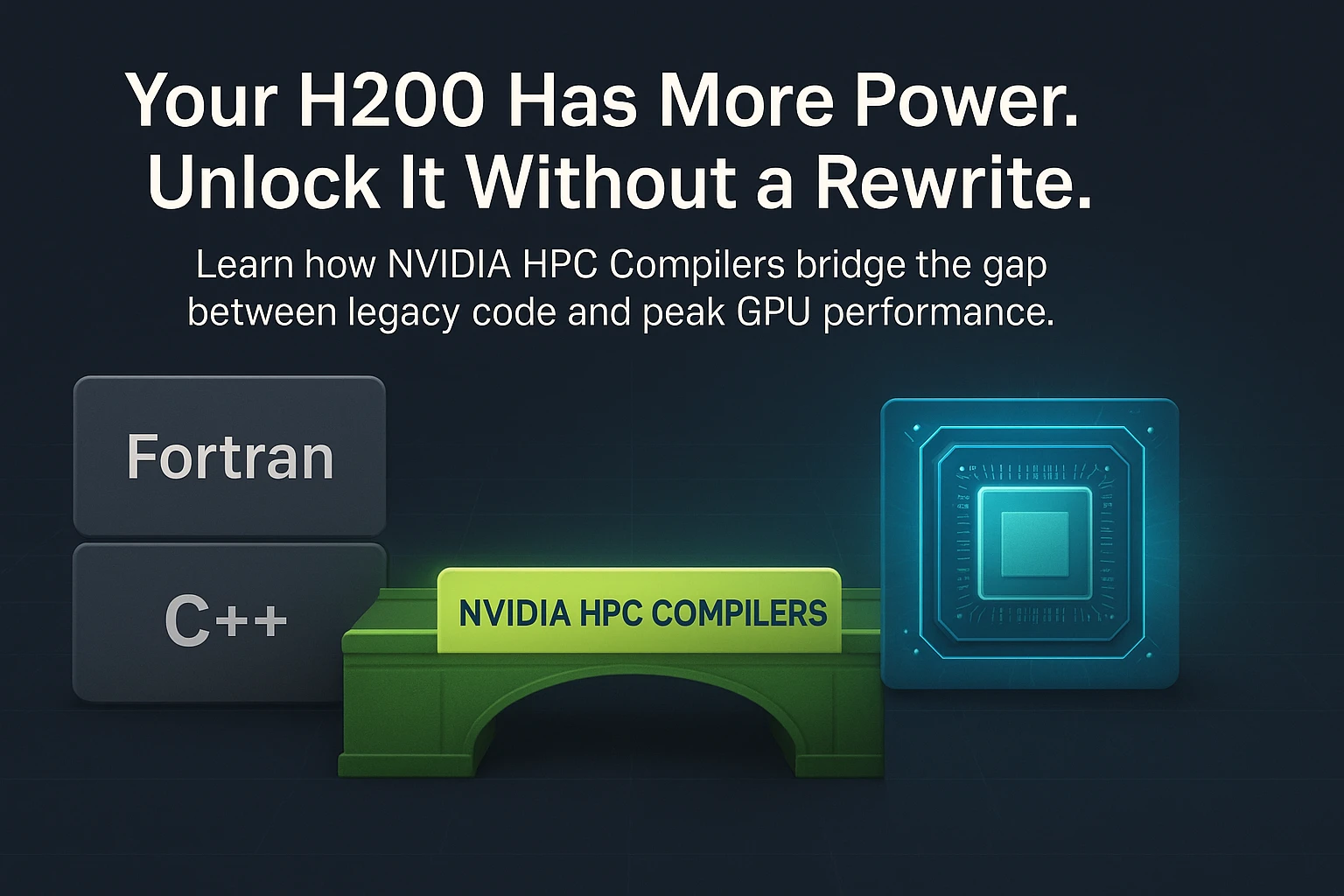
Accelerating Workflows with NVIDIA HPC Compilers: Unlocking Performance on NVIDIA H200 GPUs

Accelerating Workflows with NVIDIA HPC Compilers: Unlocking Performance on NVIDIA H200 GPUs

The NVIDIA HPC Compiler stack is essential for bridging the gap between the raw power of hardware like the NVIDIA H200 GPU and real-world application…
18 minute read
Energy and Utilities
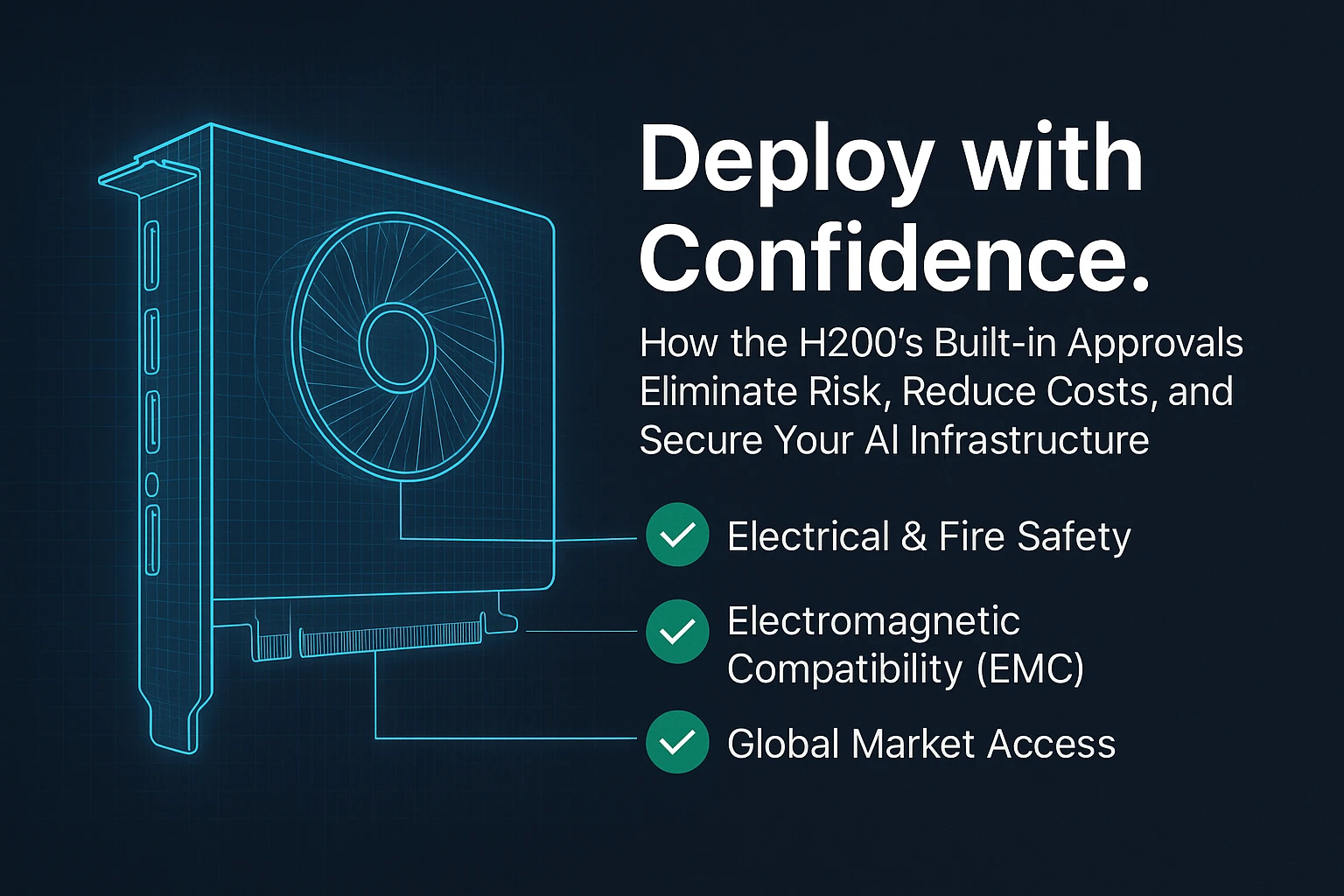
NVIDIA H200 Regulatory Approvals: Ensuring Safe and Compliant AI and HPC Deployments 

NVIDIA H200 Regulatory Approvals: Ensuring Safe and Compliant AI and HPC Deployments 

The NVIDIA H200 GPU has numerous regulatory approvals, which are essential for safe, legal, and reliable deployment of AI and high-performance computing (HPC) workloads globally.…
8 minute read
Energy and Utilities
GPUs in University Research: Powering the Next Era of Discovery

GPUs in University Research: Powering the Next Era of Discovery

Universities are increasingly adopting Graphics Processing Units (GPUs) to accelerate research in fields like medicine, climate science, and artificial intelligence, which depend on processing massive…
14 minute read
Energy and Utilities
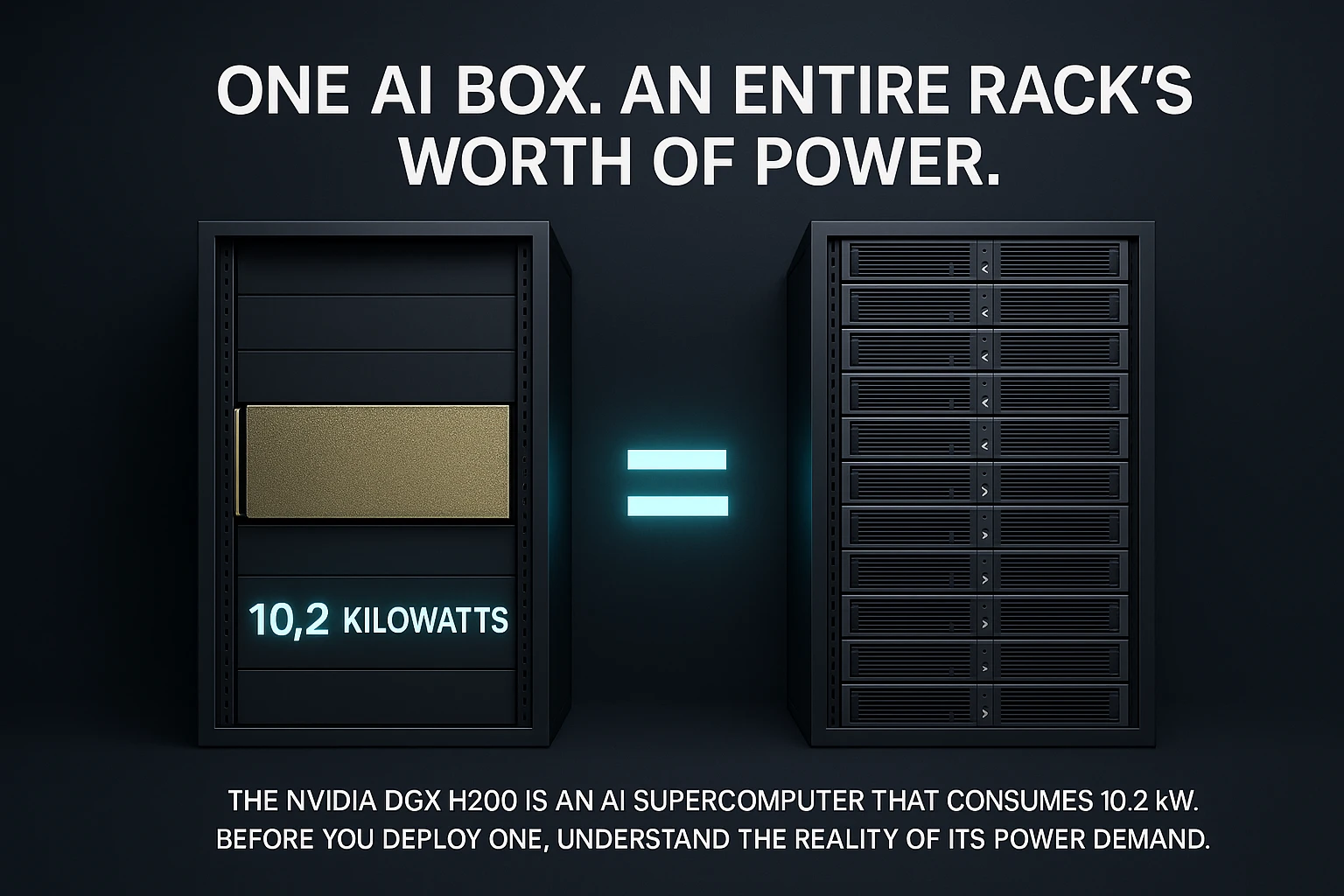
NVIDIA DGX H200 Power Consumption: What You Absolutely Must Know

NVIDIA DGX H200 Power Consumption: What You Absolutely Must Know

The NVIDIA DGX H200 is a powerful, factory-built AI supercomputer designed for complex AI and research tasks. Its high performance, driven primarily by eight H200…
14 minute read
Energy and Utilities
semifly