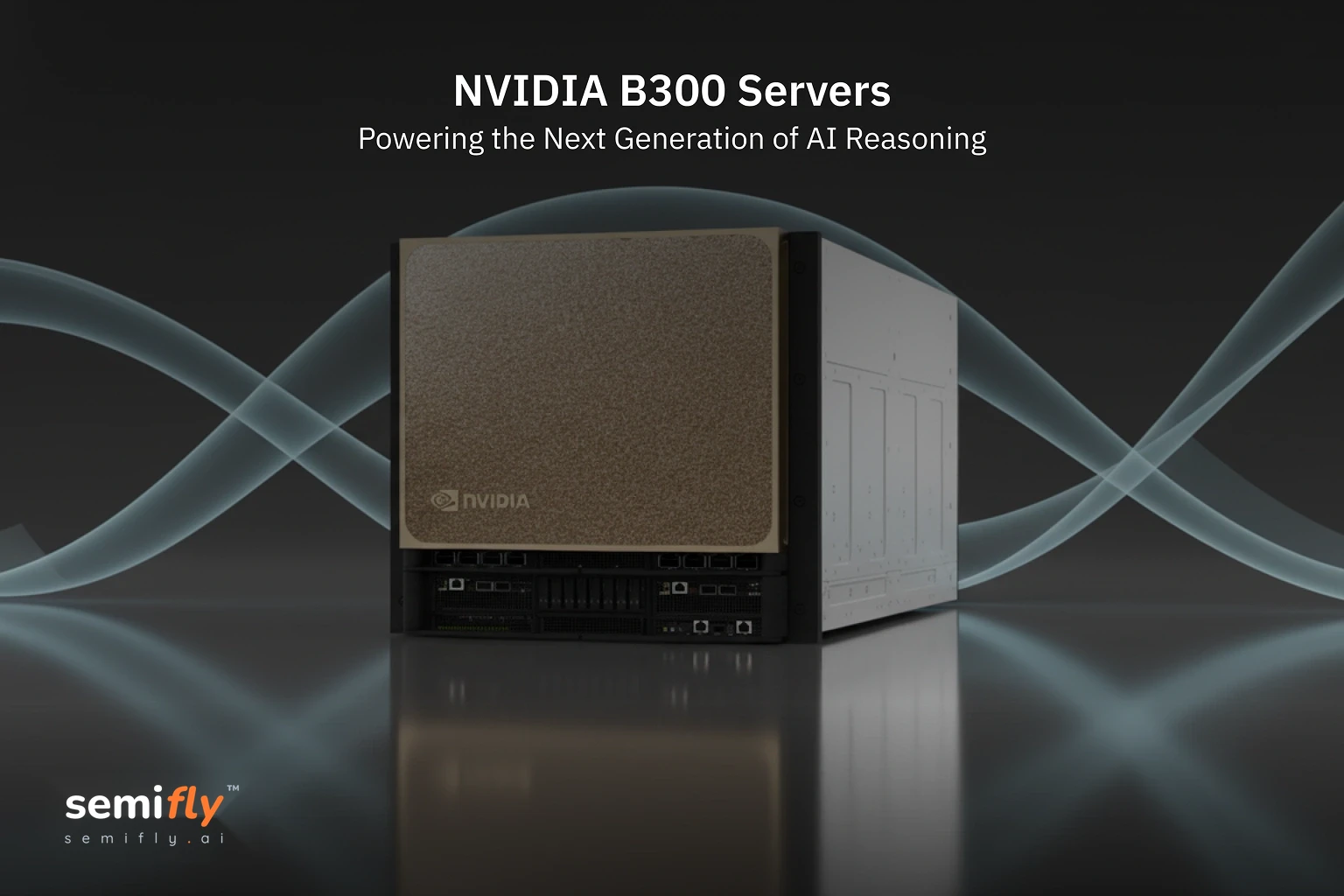
Each NVIDIA server generation has had a defining workload. Ampere scaled deep learning; Hopper made large language models economical. The B300 generation—Blackwell Ultra in server form—arrives aimed at something more specific: reasoning workloads, where models think in long chains, call tools, and burn an order of magnitude more inference compute per request than the chatbots of 2023.
Key Takeaways
- Reasoning-class inference—long chains of thought, agentic tool use—multiplies tokens per request and rewrites serving economics.
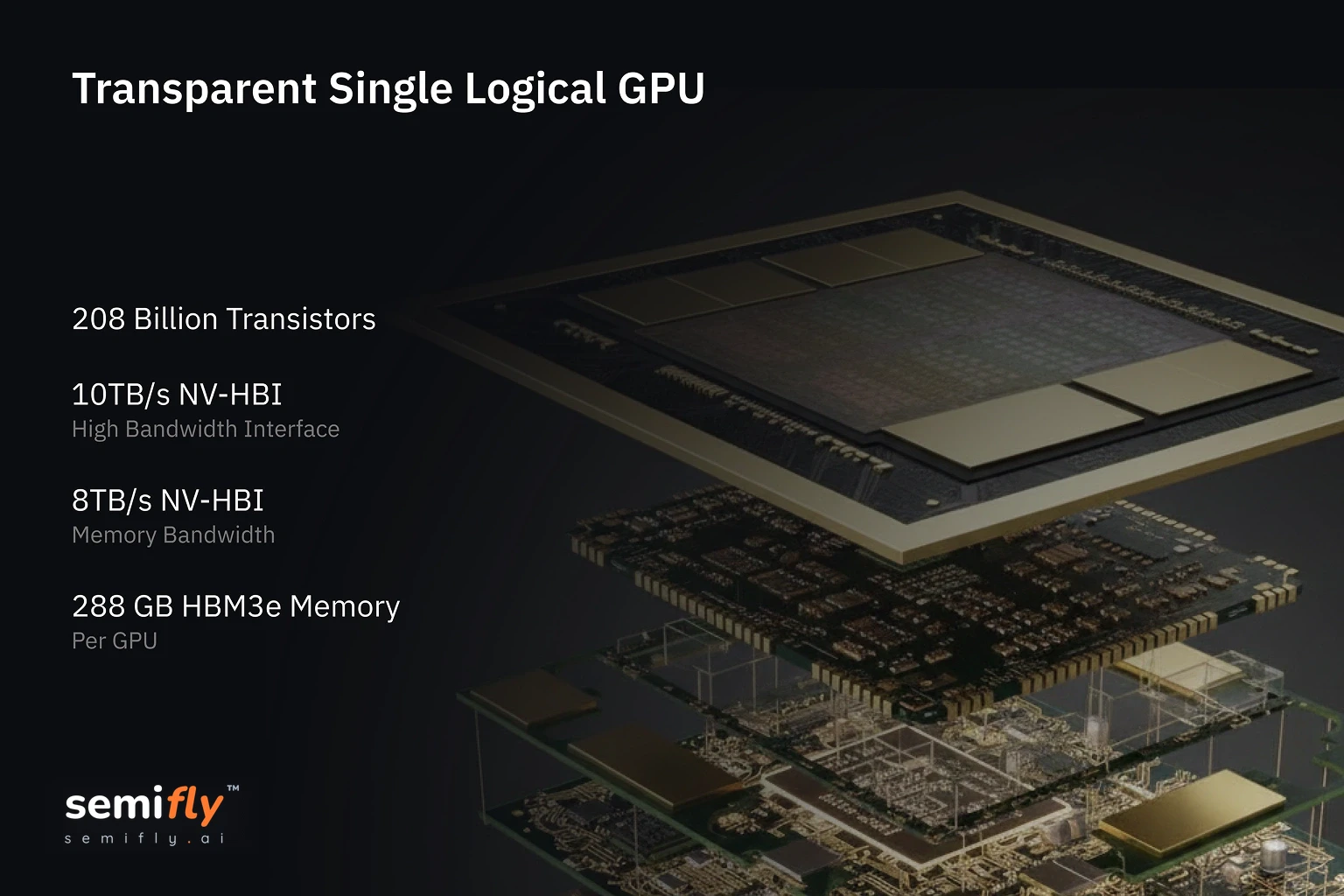
- B300 systems answer with expanded high-bandwidth memory per GPU and dense low-precision compute for exactly that profile.
- Facilities are part of the purchase: power density and liquid cooling planning belong in the first conversation, not the last.
- For most enterprises the right posture is a portfolio: B300 capacity for the reasoning tier, H200-class for the established one.
01Why reasoning changes the hardware math
A reasoning model does not answer; it deliberates. A single request can expand into thousands of intermediate tokens, multiple tool calls, and re-reads of a long context—each step leaning on the KV cache and memory bandwidth. Serving economics that were tuned for short-answer chat collapse under that multiplier. The B300 generation's design choices—more HBM capacity per GPU, more bandwidth, denser FP4/FP8 throughput—map onto this profile almost line by line.
02What enterprises should actually plan for
Facilities first. Blackwell-Ultra-class nodes draw power at densities that make liquid cooling the practical default. The site survey—rack power, heat rejection, floor loading—is not a procurement afterthought; it frequently is the schedule.
The software stack is half the product. Realizing the generation's gains requires current inference engines, disaggregated serving patterns, and orchestration aware of long-running requests. Budget integration engineering alongside the hardware line.
Burn-in discipline carries over. Everything true of H200 pre-flight testing is more true here: denser nodes, newer silicon, higher stakes per failure. Acceptance gates before production, baselines archived per node.
03Portfolio, not replacement
- Route by workload: reasoning agents and long-context serving justify B300 economics; established chat and embedding workloads remain perfectly served by H200-class fleets.
- Stage the adoption: a one-or-two-node reasoning tier with honest utilization telemetry beats a speculative cluster.
- Watch cost per completed task: with agents, per-token pricing misleads—the metric that matters is what a finished unit of work costs end to end.
The B300 generation is infrastructure for a workload most enterprises are only beginning to run in production. The organizations that will deploy it well are the ones treating it as a planned tier in a portfolio—sized by measurement, integrated deliberately, and stood up with the same operational discipline that made their last GPU generation boring in the best possible way.
Ready to put this into practice?
Talk to the Semifly team about your infrastructure, security, and compliance roadmap.
Contact Us