
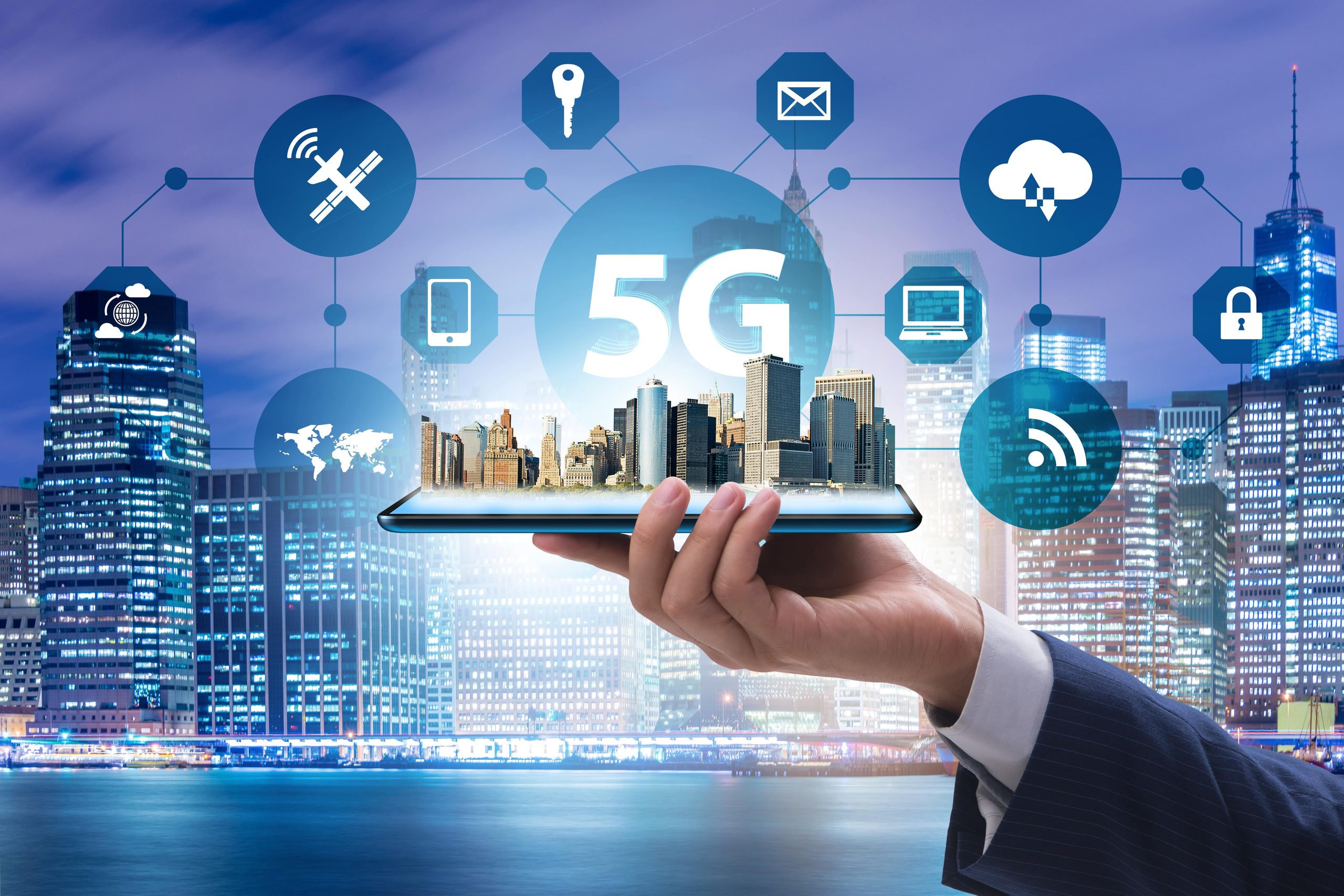
Wireless generations usually arrive one at a time; this decade delivered two at once. 5G brought cellular connectivity with wired-class latency and the option of private networks enterprises actually control; Wi-Fi 6/6E brought local wireless that finally behaves under density. Together they dissolve a constraint so old most architectures stopped noticing it: the assumption that anything mission-critical eventually needs a cable.
Key Takeaways
- The pairing matters more than either standard: Wi-Fi 6 for dense indoor capacity, 5G (especially private 5G) for mobility, reach, and deterministic coverage.
- The unlocked workloads are physical: AGVs and robotics, massive sensor fleets, AR-assisted work, pop-up and outdoor operations.
- Private 5G turns the cellular network into enterprise infrastructure—SIM-based identity, dedicated spectrum, your policies.
- The constraint moves: security, segmentation, and operations now decide whether untethered means uncontrolled.
01What each wave actually contributes
Wi-Fi 6/6E is about behavior under crowding: OFDMA and better scheduling let hundreds of clients per area share airtime gracefully, target wake time stretches IoT batteries, and the 6GHz band adds clean spectrum where it is permitted. The practical effect—offices, warehouses, and venues where wireless stops degrading at exactly the moment everyone needs it.
5G contributes what local wireless cannot: coverage across campuses, ports, and field operations; mobility with clean handoffs at vehicle speeds; and—in its private form—a network where the enterprise owns the core, the SIMs, and the quality-of-service policy. Latency in the low tens of milliseconds makes remote control and real-time coordination engineering problems rather than fantasies.
02The workloads that change first
- Mobile automation: AGVs, picking robots, and drones that roam entire facilities without connectivity dead zones dictating routes.
- Sensor saturation: condition monitoring on every motor and pallet, practical at last because the network tolerates the density and the batteries tolerate the years.
- Assisted hands: AR guidance and remote-expert video on the factory floor and in the field, riding latency budgets that keep overlays glued to reality.
- Instant footprints: pop-up sites, construction operations, and temporary venues with enterprise-grade connectivity on day zero.
03Riding it without wiping out
The failure mode is treating either technology as plug-and-play. Riding the wave well means designing them together (Wi-Fi 6 indoors, 5G for the long tail, with deliberate handoff points); extending zero-trust segmentation to every new wireless device class from day one; planning spectrum and site surveys with the same rigor the wired plant once received; and instrumenting experience metrics so degradation surfaces in dashboards, not complaints. For most organizations the sensible route is a partner who has built these hybrid estates before—the technologies are mature; the integration discipline is where projects differ.
04The strategic point
Connectivity generations are infrastructure decisions wearing technology costumes: what you deploy now sets which operations you can automate for the next decade. The enterprises moving early are not chasing speed numbers—they are buying optionality, and the next wave of operational innovation will land first where the wireless foundation is already poured.
Ready to put this into practice?
Talk to the Semifly team about your infrastructure, security, and compliance roadmap.
Contact Us