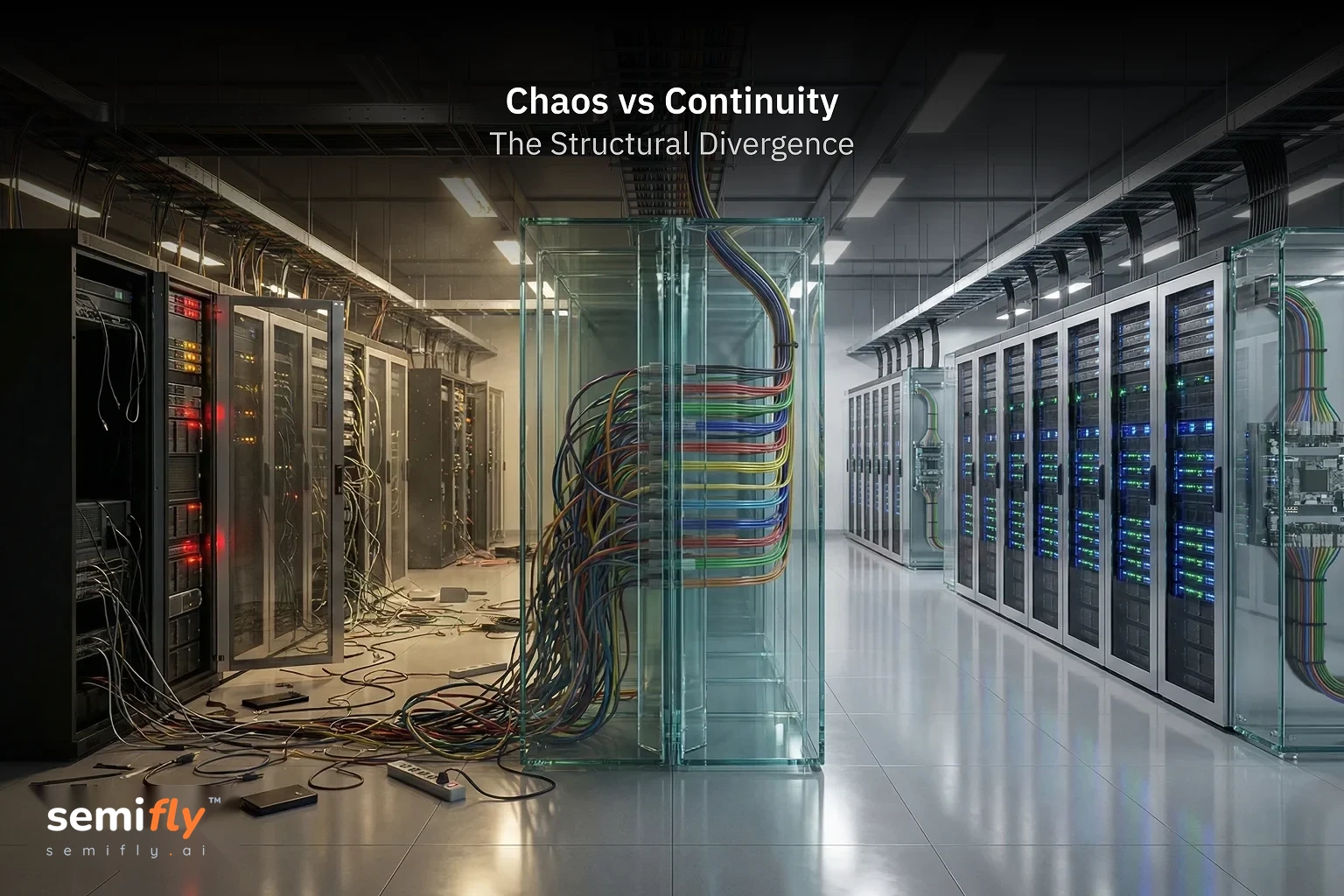

Trust used to be a soft word in hard business—something for brand decks while the real negotiations ran on price and spec. That era ended quietly. Customers now ask for your security posture before your rate card; partners audit your controls before integrating; employees choose employers on credibility; and one mishandled incident moves valuations. Trust has become operational—built by systems and habits, measurable in renewals, and lost at the speed of a status page.
Key Takeaways
- Trust converted from sentiment to infrastructure: it is now assessed, scored, and contracted.
- Its three load-bearing pillars are security, reliability, and candor—each operational, none cosmetic.
- Trust compounds slowly and collapses quickly; the asymmetry is the management challenge.
- The trust-building work is indistinguishable from good operations—which is why it can be systematized.
01How trust became a procurement criterion
Three shifts did the converting. Digitization made every vendor relationship a data relationship—your customer's risk team now owns part of the buying decision, and their questionnaire is the new first meeting. Supply-chain incidents taught everyone that a partner's weakness is their own breach-in-waiting. And transparency became involuntary: outages, leaks, and missteps publish themselves now, in real time, with screenshots. The organizations thriving in this environment did not get lucky—they industrialized being dependable.
02The three pillars, operationally
- Security as table stakes: certifications (SOC 2, ISO 27001) function as trust passports—not because the badge matters, but because maintaining one forces the underlying habits: access reviews, tested recovery, evidence on demand.
- Reliability as a promise kept in public: SLAs honored, maintenance communicated, incidents resolved with visible competence. Every quarter of boring uptime is a deposit.
- Candor as the differentiator: when something breaks—and something will—the organizations that disclose early, explain plainly, and show the fix consistently exit incidents with more trust than peers who went quiet. The cover-up tax is real and compounding.

03Managing the asymmetry
Trust accumulates in years and evaporates in an afternoon—so it must be managed like any asymmetric risk. That means investing in the boring preventive layer (the controls, the redundancy, the rehearsals) before it is demanded; preparing the crisis playbook—who speaks, how fast, with what honesty—before the crisis; and auditing the gap between what marketing claims and what operations deliver, because that gap is where collapses begin. Companies that treat trust as a managed asset assign it owners and metrics: renewal rates, audit findings, incident-response timings, employee attrition.
04The practical takeaway
You cannot buy trust, but you can absolutely build the machine that produces it: secure systems, reliable operations, honest communication, and proof on demand. That machine is just good infrastructure and good habits—run consistently, visible to the people deciding whether to bet on you. In a corporate world that audits everything, being verifiably dependable is the most durable competitive advantage left.
Ready to put this into practice?
Talk to the Semifly team about your infrastructure, security, and compliance roadmap.
Contact Us