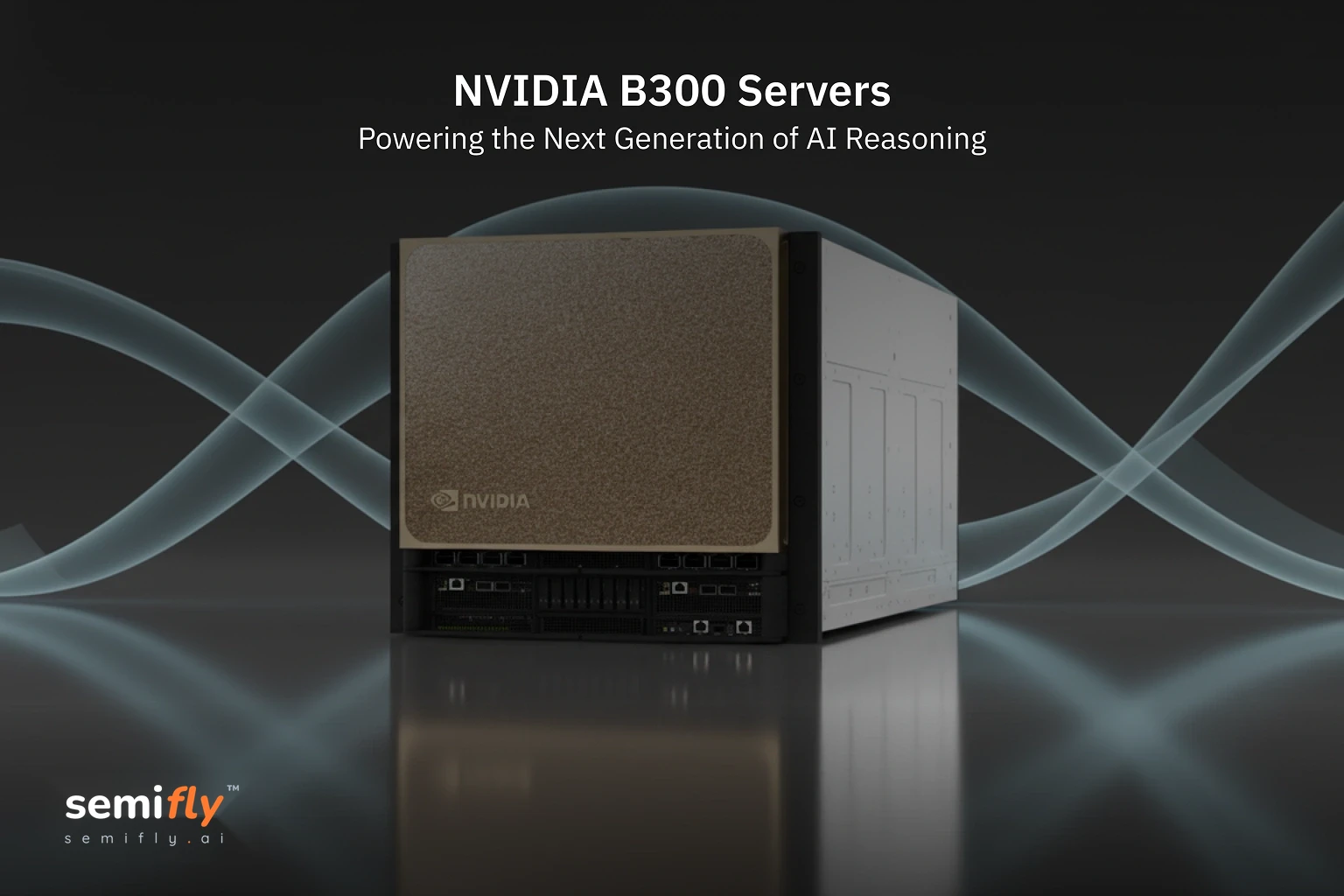
For the H200 generation, air cooling still works—that is precisely what makes the cooling decision treacherous. Choose air because it is familiar, and you may be buying the last comfortable generation; the silicon roadmap underneath (B300-class and beyond) climbs power densities where liquid stops being exotic and starts being arithmetic. The cooling question is really a question about your next three years of GPU plans.
Key Takeaways
- H200 nodes run well on air at moderate rack densities; the constraint is racks-per-row and kW-per-rack, not feasibility.
- Liquid (direct-to-chip) buys density, acoustics, efficiency—and compatibility with the next silicon generation's power curve.
- The real costs are facility-side: heat rejection, plumbing, floor planning—evaluate at the room level, not the chassis level.
- Future-proofing is staged: liquid-ready facilities with air-cooled nodes today is a legitimate, often optimal, posture.
01What each option actually is
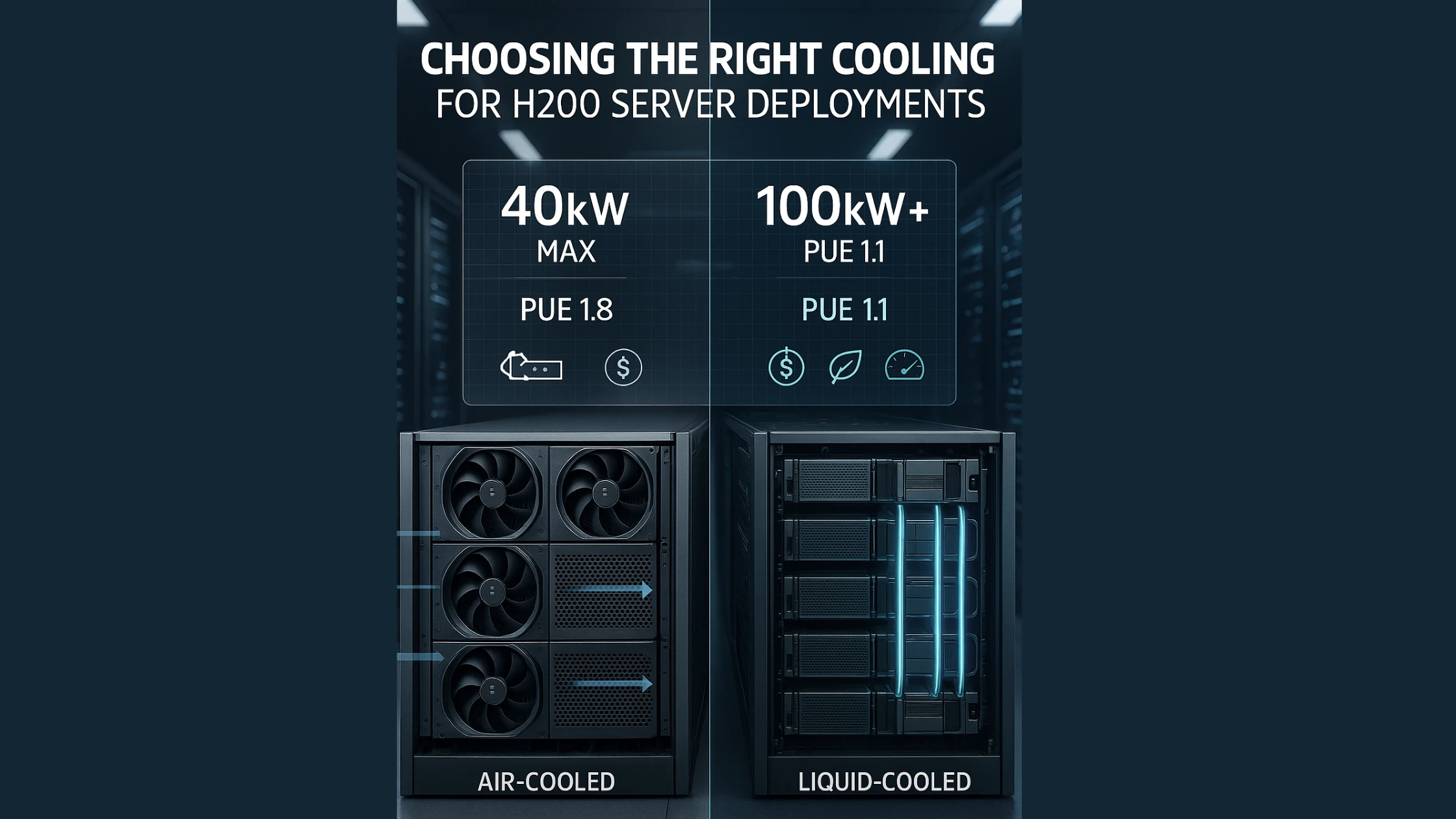
Air at H200 power levels means engineered airflow: high-static-pressure fans, hot/cold aisle containment, and honest limits around 30–40kW per rack—often two to three nodes—before the room itself becomes the bottleneck. It deploys anywhere, services with familiar procedures, and wastes some efficiency moving air hard.
Direct-to-chip liquid puts cold plates on GPUs and CPUs, carrying most node heat away in coolant loops via rack manifolds and CDUs. It unlocks 80–120kW+ racks, quieter and more efficient operation, and steadier silicon temperatures—at the price of plumbing, leak protocols, and a facilities relationship with your water system.
02The decision, structured
- Density ambition: a handful of nodes spread across existing racks → air, comfortably. Consolidated AI rows, cluster growth plans, or colocation priced per rack → liquid's density pays rent.
- Roadmap exposure: committed to next-gen silicon within 24–36 months? Next-generation rack-scale systems increasingly assume liquid. Building liquid-capable now beats retrofitting later.
- Facility reality: existing chilled-water loops and CDU space make liquid incremental; their absence makes it a project. Price the project honestly—including the version where you do it anyway in 2027.
- Operational maturity: liquid demands new runbooks—coolant chemistry, leak response, quick-disconnect discipline. Staff it or partner for it.

03The staged path most should take
Future-proofing rarely means buying everything liquid today. The robust pattern: deploy H200 on air where densities allow, while making the facility liquid-ready—space for CDUs, valved taps on the loop, rack positions planned for manifolds. Nodes are 3–5-year assets; rooms are 15-year assets. Spend the future-proofing budget on the asset that lives longest, and let each silicon generation choose its own cooling on arrival.
Ready to put this into practice?
Talk to the Semifly team about your infrastructure, security, and compliance roadmap.
Contact Us