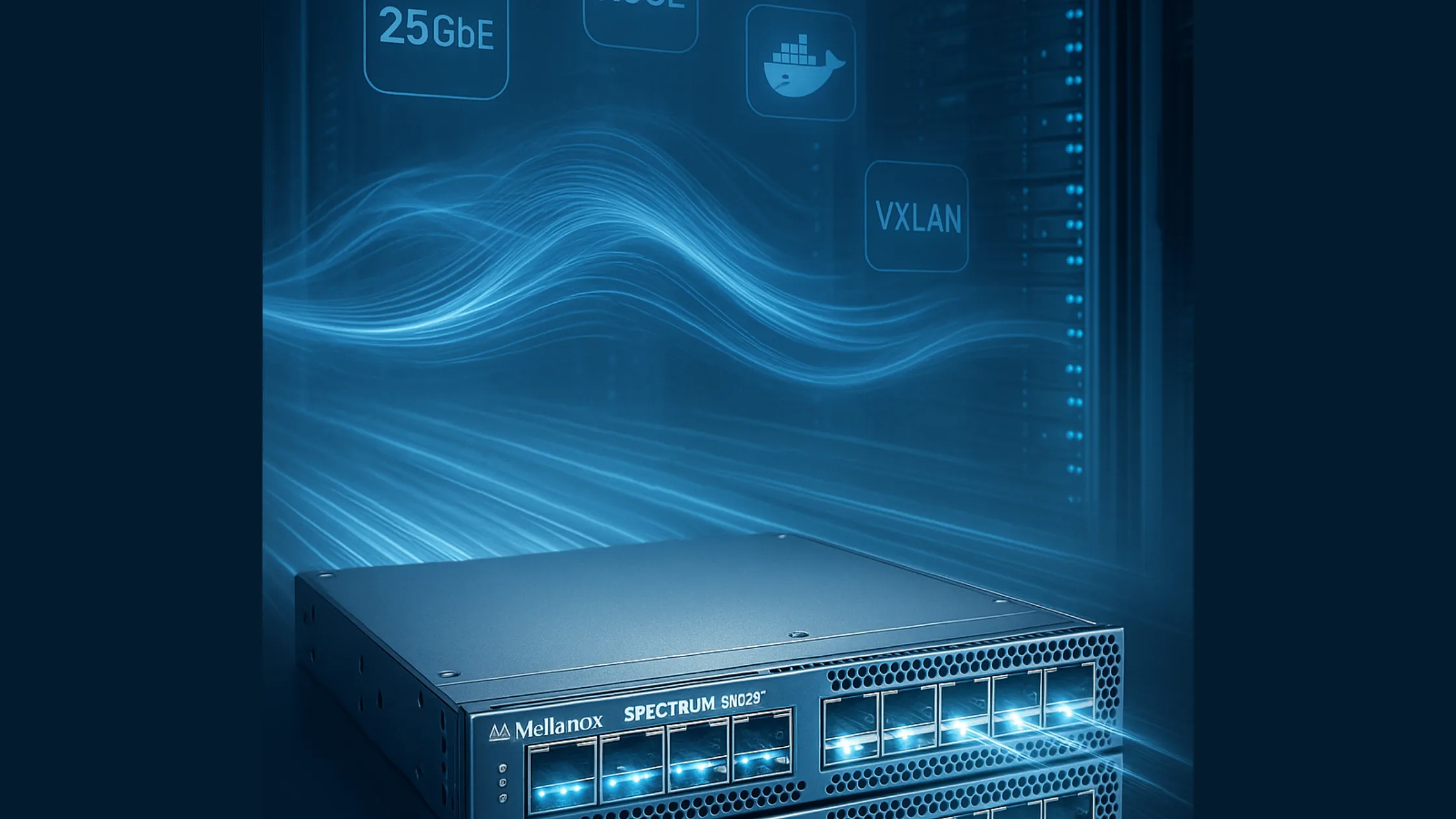
Most switch reviews chase the biggest port counts. The Spectrum SN2010 earns a review for the opposite reason: it is deliberately small—half-rack-width, 18 ports of 10/25GbE plus four 40/100GbE uplinks—and that restraint is exactly what hyperconverged and storage-edge deployments have been asking for. Two of them side-by-side in 1U deliver redundant top-of-rack switching scaled to how HCI clusters are actually built: four to twelve nodes, not forty-eight.
Key Takeaways
- Half-width form factor: redundant ToR pairs in a single rack unit, sized for real HCI cluster counts.
- Spectrum ASIC delivers line-rate, low-latency, fair packet handling—the properties storage traffic actually punishes you for lacking.
- Proper RoCE support makes it a legitimate fabric for NVMe-oF and modern software-defined storage.
- The trade-offs are inherent to the size: 18 access ports is the product, not a limitation to engineer around.
01Why small is the feature
Hyperconverged clusters put storage on the same wire as everything else, which makes the top-of-rack switch part of the storage array in all but name. Sizing that switch honestly—rather than buying 48 ports to light 14—halves the cost, the power, and the failure domain. The SN2010's geometry (two per 1U, redundant) acknowledges what HCI vendors' reference architectures have implied for years.
02The silicon underneath
The Spectrum ASIC's reputation rests on behaviors that matter most under storage traffic: line-rate throughput across packet sizes, consistently low and predictable latency, and fair buffering that avoids the microburst pathologies cheaper silicon exhibits exactly when a rebuild storm hits. Crucially for modern stacks, RoCE support is first-class—NVMe-over-Fabrics and RDMA-accelerated storage replication run the way their datasheets promise, with congestion handling that keeps lossless classes honest.
03Deployment sweet spots
- HCI clusters (vSAN-class, Nutanix-class): the canonical fit—redundant 25GbE access, 100GbE uplinks, half the rack tax.
- NVMe-oF storage edge: a compact RoCE fabric fronting flash shelves for a pod of compute.
- Branch and edge data centers: full data-center-grade switching in sites where 1U of total switching is the budget.
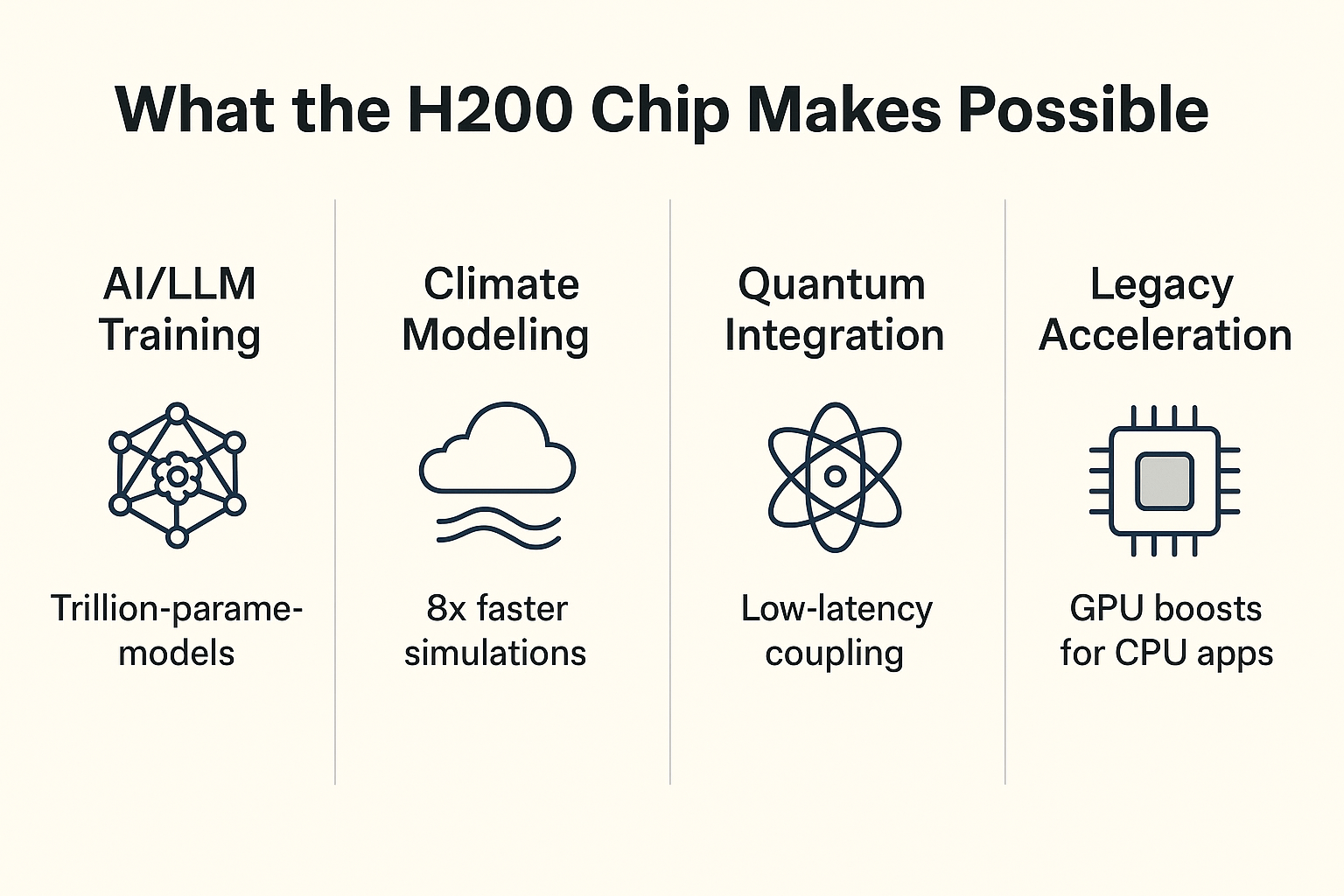
- AI-adjacent storage tiers: feeding data-staging nodes around GPU pods—not the training fabric itself, which lives at 400Gb-class, but the tier that loads it.
04Honest limits and verdict
Eighteen access ports is the product. Outgrow it mid-life and you are buying again—so count nodes with growth honesty. Higher-touch enterprise network teams should also note its ecosystem leans open/Linux-flavored rather than legacy-CLI traditional. Within its intended envelope, though, the SN2010 is that rare network product: precisely sized, predictably fast, and priced like someone counted what the deployment actually needs. For HCI and storage-edge fabrics, it remains the default we reach for.
Ready to put this into practice?
Talk to the Semifly team about your infrastructure, security, and compliance roadmap.
Contact Us